
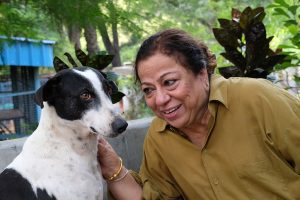
 When people think about healthy communities, they usually think of hospitals, schools, sanitation systems, and public services. Rarely do they think about animals.
Yet the wellbeing of people, animals, and the environment is deeply interconnected. Across India, community dogs, livestock, working animals, birds, wildlife, and people share the same spaces, resources, and challenges. Their health and welfare are not separate issues but part of a larger system that affects the quality of life of entire communities.
This understanding lies at the heart of the One Health approach, a growing global movement that recognises that human health, animal health, and environmental health are inseparable.
For 45 years, Help in Suffering (HIS) has witnessed this connection firsthand through its work in Jaipur. What began as an effort to alleviate animal suffering has evolved into a broader mission that touches public health, education, livelihoods, and community wellbeing.
India is home to millions of community animals that live alongside people every day. Street dogs, cattle, camels, horses, donkeys, birds, and other animals are part of the social and ecological fabric of our cities and villages.
As urbanisation accelerates, both people and animals face increasing pressures. Road accidents, waste management challenges, disease transmission, habitat loss, and human-animal conflict affect communities across the country.
Addressing these issues requires more than isolated interventions. It requires recognising that healthy communities depend on creating safe, humane, and sustainable systems for both people and animals.
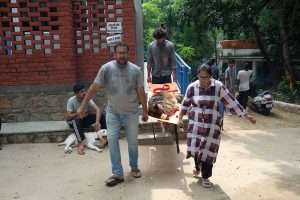 Every day, injured, abandoned, and sick animals are found on roadsides, construction sites, markets, and neighbourhoods across Jaipur.
Behind every rescue is a network of veterinarians, animal care staff, ambulances, treatment facilities, medicines, and rehabilitation services working to respond to emergencies and reduce suffering.
At HIS, this work operates around the clock. The organisation responds to thousands of animals each year, treating victims of road accidents, infectious diseases, neglect, and abandonment.
While rescue is often viewed solely as an animal welfare service, its impact extends much further. Timely treatment of injured and diseased animals contributes to public health, reduces community concerns, prevents unnecessary suffering, and helps create safer shared spaces.
In many ways, animal rescue functions as an often-overlooked form of urban infrastructure — supporting not only animals in crisis but the wellbeing of the wider community.
Animal welfare is not only about companion animals. Across Rajasthan, working animals continue to support livelihoods and local economies.
For generations, camels have played an important role in the cultural and economic life of the state. Yet changing economic conditions, urban expansion, declining grazing areas, and limited access to veterinary care have created new challenges for both camels and the communities that depend on them.
Recognising these realities, HIS developed one of India’s most extensive camel welfare programmes. Through treatment services, rescue interventions, owner outreach, and welfare awareness initiatives, the programme supports both animals and the people whose livelihoods are linked to them.
This work highlights an important lesson: when animal welfare is strengthened, human wellbeing is often strengthened as well.
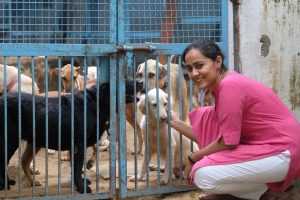 While rescue and treatment address immediate needs, lasting change requires something deeper: a shift in attitudes.
Over decades of working in communities, HIS recognised that many problems affecting animals stem from fear, misunderstanding, and lack of awareness. Sustainable animal welfare cannot be achieved through treatment alone; it also requires education.
This insight led to the creation of the Humane Education Programme, “A World for All.”
Delivered in schools across Rajasthan, the programme helps children understand animal behaviour, practise safe interactions, learn about rabies prevention, and develop empathy for living beings. More importantly, it encourages children to see themselves as responsible participants in a shared world.
Humane education is about much more than animals. It nurtures compassion, ethical thinking, responsibility, and respect qualities that strengthen communities and contribute to healthier social environments.
When children learn to understand rather than fear, they carry those lessons into their homes, schools, and neighbourhoods.
The strongest communities are not defined solely by physical infrastructure or economic growth. They are also shaped by the values they choose to uphold.
Communities that invest in care, responsibility, and coexistence often experience stronger social cohesion and greater civic engagement. Animal welfare provides a practical and accessible way to nurture these values.
Whether it is helping an injured animal, teaching children about empathy, supporting working animals, or promoting responsible coexistence, these actions contribute to a culture of compassion that benefits everyone.
 Looking Ahead
The challenges facing modern communities are increasingly interconnected. Public health, environmental sustainability, education, livelihoods, and animal welfare cannot be addressed in isolation.
The future will require integrated approaches that recognise these connections and work across traditional boundaries.
For 45 years, Help in Suffering has seen firsthand that animal welfare is about far more than animals alone. It is about creating healthier, safer, and more compassionate communities where people and animals can thrive together.
Because when we improve the lives of animals, we also help build a better future for ourselves.