
 Understanding the Challenge
In the early 1990s, Jaipur faced acute challenges. The street dog population was estimated at 50,000+ animals, and the city was seeing over 721 dog bite incidents per 100,000 people annually. Traditional approaches focused on culling, removing or killing street dogs but these methods consistently failed. When dogs were removed from an area, new ones quickly moved in. The population recovered within months, and the cycle continued. Even cities that spent millions on culling programmes saw temporary results followed by problems returning.
Experts increasingly recognized that rabies control required a different approach, one that addressed root causes rather than symptoms. The World Health Organization (WHO) and international organizations were advocating for humane, population-management solutions. Jaipur became the first Indian city to fully commit to this vision.
In 1994, Help in Suffering, launched by Smt. Maneka Gandhi, introduced the Animal Birth Control programme, among the first large-scale humane ABC efforts in India. By 1996, it had expanded city-wide.
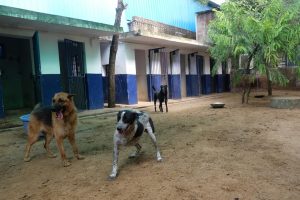
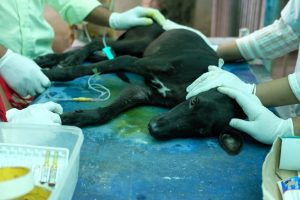
The approach was systematic: Mobile veterinary units would humanely capture dogs using gentle methods, transport them to ABC centres, perform surgical sterilization, vaccinate them against rabies, provide medical treatment, observe them for minimum 3 days of post-operative care, and release them back to their exact original territories. This last step was crucial, it prevented the “vacuum effect” that made culling ineffective.
The scientific principle was elegant: sterilization would reduce population growth while vaccination would create herd immunity, breaking rabies transmission. Public health research established that vaccinating 70% of a dog population achieves herd immunity a threshold HIS set as its target.
 What distinguished Jaipur’s programme was its commitment to scientific monitoring. Starting in 1997, Help in Suffering initiated systematic bi-annual surveys tracking dog population numbers, sex ratios, sterilization and vaccination rates, and public health outcomes. This created one of the world’s most extensive street dog datasets 28 years of continuous monitoring with 40,000+ individual dog records. This is the longest continuous street dog population study conducted anywhere globally.
Between 1997 and 2020, HIS research was published in 10 peer-reviewed scientific journals, including Veterinary Record, BMC Veterinary Research, and Preventive Veterinary Medicine. In 2009, HIS’s expertise was formally recognized when the organization contributed to developing the AWBI (Animal Welfare Board of India) Standard Operating Procedures for ABC programmes the national standard all ABC initiatives are expected to follow.
The programme evolved based on evidence, not habit. If vaccination coverage dropped below 70%, resources increased. If post-operative mortality showed any trend, surgical techniques were refined. This scientific approach transformed Jaipur’s programme from an ambitious initiative into a globally-recognized public health intervention.
This is not a quick fix but it’s a permanent one.
 With 45,000+ rabies deaths annually across India and the Supreme Court’s 2015 directive requiring all states to implement ABC programmes, the need for scalable, proven models is urgent.
Jaipur demonstrates that a city can reduce rabies risks, improve public safety, and enhance animal welfare simultaneously. It shows that compassion and science are not opposing forces—together, they become powerful tools for solving complex challenges.
The question facing every city and state is no longer “Can we do this?” The answer is proven. The question now is: “When will our city commit to doing this?”
For those interested in replicating the Jaipur model:
*Rabies elimination is possible. Jaipur proves it. The next question is not “Can we do this?” but “When will other cities start?”*